

In the digital age, terms like cyberspace and cybersecurity are often used interchangeably, but they mean very different things. Understanding the distinction is essential for professionals, educators, and anyone who is in the digital world. In this blog article, we will explore what each term means, how they relate, and why recognizing the difference is crucial.
What is cyberspace?
Simply put, cyberspace is a virtual environment created by global networks of connected computers, devices, and systems. It has no physical boundaries, yet it surrounds us in everyday life through the internet, cloud platforms, smart technologies, and digital services.
Cyberspace allows people to communicate, work, learn, and share information instantly across borders. It’s a space without borders or limits, and one that has become deeply woven into how modern societies operate.
However, as cyberspace grows more complex and central to our lives, it also becomes more vulnerable. Our increasing reliance on this digital realm opens the door to threats such as hacking, fraud, data breaches, and more. In this vast and ever-expanding digital space, security has become a critical concern.
What is cybersecurity?
Cybersecurity refers to the technologies, practices, and processes designed to protect cyberspace—and the data and systems within it—from cyber threats. These threats include everything from phishing attacks and malware to ransomware and identity theft.
As cybercrime has grown in both frequency and sophistication, governments around the world have introduced cyber laws, which are legal frameworks that address the misuse of digital systems and aim to protect both people and critical infrastructure. While each country may have its own approach, the global goal is the same: to detect, prevent, and recover from malicious cyber activity.
Importantly, cybersecurity is no longer just an IT issue. It requires a coordinated effort that spans across government agencies, private industries, educational institutions, and individual users. A strong cybersecurity ecosystem includes not only technical safeguards, but also public awareness, strategic policymaking, and international cooperation.
While closley connected, cyberspace and cybersecurity are fundamentally different in their focus.
- Cyberspace is the environment where digital activity takes place.
- Cybersecurity is the defense system that protects the environment from harm.
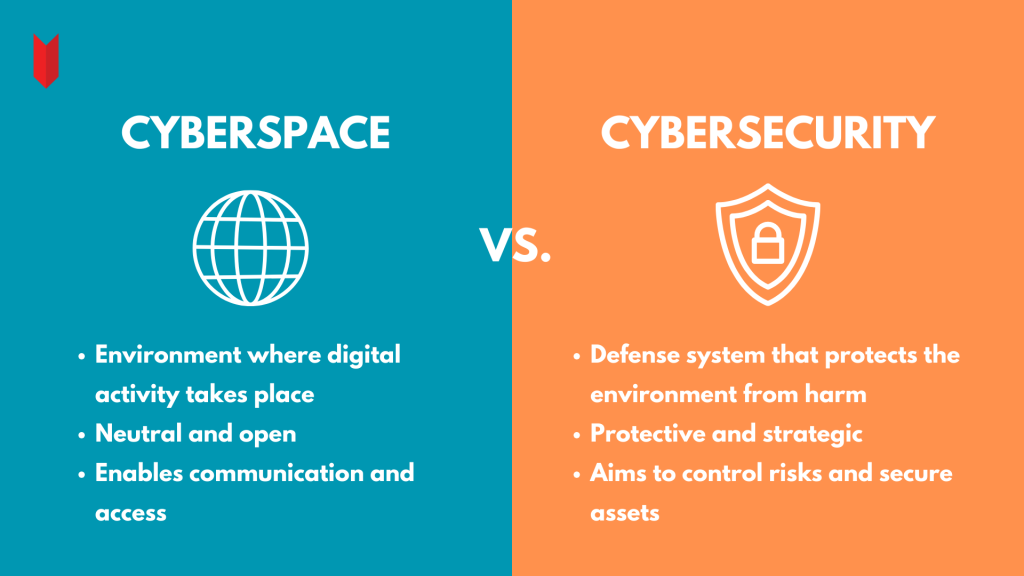
The similarities are that both are integral to the digital age and involve interconnected systems, technologies, and people. However, the differences lie in their roles: cyberspace is neutral and open, enabling communication and access, whereas cybersecurity is protective and strategic, aiming to control risks and secure assets.
Why does it matter?
As cyberspace continues to evolve, so must our strategies to defend it. We are not only protecting data, but we’re safeguarding trust, privacy, economies, and even national security. Understanding the relationship between cyberspace and cybersecurity is the first step in navigating our digital future wisely.