

Today, November 20 is World Children’s Day. We celebrate international unity, raise awareness of children’s rights, and promote their well-being. As UNICEF emphasizes, child rights are fundamental human rights, meaning that they are non-negotiable and universal. Yet, there are still too many places where children’s rights are not protected, including the digital world, where exploitation poses a significant threat, unfortunately.
With the rapid evolution of technology, our world has gained incredible opportunities and conveniences in our lives as well as significant challenges. A sad truth is that there are always people who misuse digital advancements with harmful intentions.
In this blog article, we explore how digital platforms can endanger children, the core issue involved, and the collective responsibility of ensuring a safer online environment.
Dark web, a haven for exploitation
You might have come across the term “dark web” in news articles about crimes like drug trafficking, identity theft, or crypto laundering. Disturbingly, the dark web is also where child exploitation materials, such as child sexual abuse material (CSAM), are distributed. What is the dark web and why do these predators are in there?
The internet is often divided into three main layers: open web, deep web, and dark web. Each layer has different purposes and is accessible in different ways.
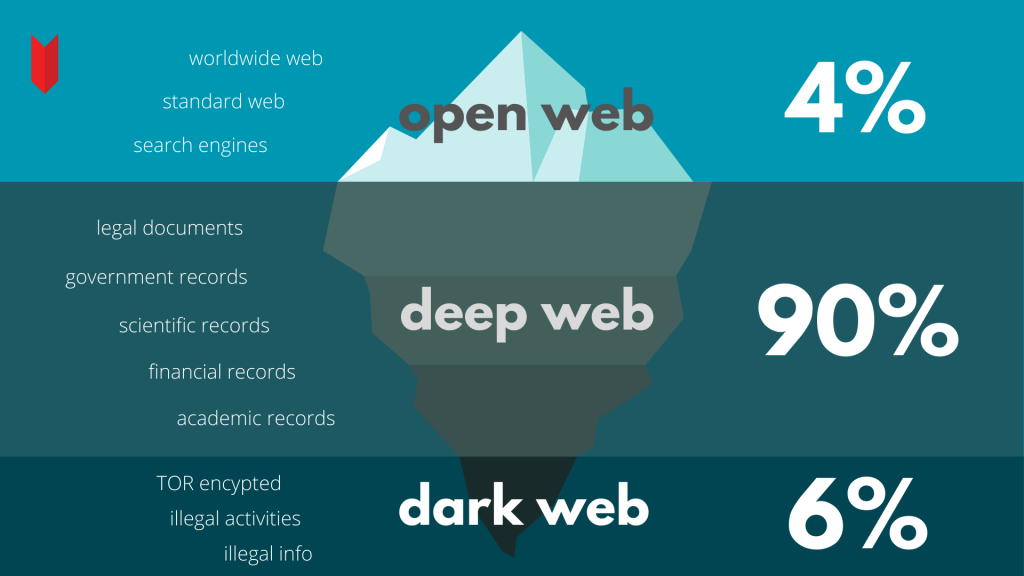
Open web (also known as the surface web)
- Definition: The open web consists of all publicly accessible websites and content that are indexed by search engines like Google, Bing, and Yahoo.
- Access: You can access the open web through standard browsers without any special permissions or configurations.
- Examples: News sites, social media platforms, e-commerce websites, blogs, and public forums.
- Characteristics: The open web makes up only a small portion of the internet (about 4-5%). It’s the part of the internet most people interact with daily.
Deep web
- Definition: The deep web includes all the content that is not indexed by search engines. This is content hidden behind passwords, paywalls, or other restricted access.
- Access: You can access the deep web with the right credentials or by directly entering the URL, but you will not find it through regular search engines.
- Examples: Online banking portals, academic databases, private intranets, subscription-based services, and personal email accounts.
- Characteristics: The deep web is vast, making up most of the internet (around 90-95%). Most of this content is legitimate and necessary for privacy and functionality, such as medical records or government databases.
Dark web
- Definition: The dark web is a small, intentionally hidden portion of the deep web that requires specialized software to access. It’s often associated with anonymity, privacy, and, sometimes, illegal activities.
- Access: Accessing the dark web requires specific software, like the Tor (The Onion Router) browser, which anonymizes user identities by bouncing their traffic across multiple servers.
- Examples: Anonymous forums, black markets, private messaging platforms, whistleblowing sites (such as SecureDrop), and privacy-focused search engines.
Characteristics: The dark web is relatively small compared to the open web and deep web. While some dark web activities are illegal, not all content on the dark web is illicit. There are legitimate uses for it, such as enabling free speech in restrictive countries or providing anonymity for activists and journalists.
End-to-End Encryption (E2EE) and children protection
People with malicious intentions explicitly hide in the dark web and exploit, abuse, and violate children’s rights. But the problem these days is that these actors don’t even need to use dark web but simply a daily messenger. Amid it, there is End-to-End Encryption (E2EE). To put it simply, E2EE is a method of data protection where information is encrypted on the sender’s device and remains encrypted until it reaches the recipient.
When it comes to child protection the challenge of this method is that the law enforcement can’t access and track these illegal activities. Investigators may be aware of suspects or persons of interest but not able to view their communications, hindering their ability to gather crucial information or evidence, so basically, law enforcement faces a “going dark” problem. These challenges are applying the same for parents and guardians. It is hard to know what is really going on.
Privacy vs child protection?: a delicate balance
The debate around E2EE highlights a tension between two fundamental human rights: privacy and child protection. The rights of protection, expression, participation, education, health care, shelter, and good nutrition for all under the age of 18 is defined in the Declaration of the Rights of the Child, which is adopted by the UN General Assembly.
Whereas Article 12 of the UN Declaration of Human Rights and Article 17 of the International Covenant on Civil and Political Rights read “No one shall be subjected to arbitrary or unlawful interference with his privacy, family, home or correspondence, nor to unlawful attacks on his honour and reputation. Everyone has the right to the protection of the law against such interference or attacks.”
In the real world, there was a case in 2021 that Apple abandoned a plan to implement CSAM photo scanning tool after getting widespread criticism from privacy and security researchers and digital rights groups. Apple’s intention was to identify and report illegal content while preserving user privacy. But the main critics were that on-device scanning could be exploited for mass surveillance and censorship. Recently, in August 2024, the CEO of Telegram Pavel Durov is arrested in France with charges of enabling illegal transactions and complicity in the distribution of CSAM and failing to cooperate with law enforcement. Cybersecurity podcaster Patrick Gray has been describing Telegram as “the dark web in your pocket”. This example highlights the ongoing tension between maintaining user privacy through encryption and addressing the potential misuse of encrypted platforms for illicit purposes.
Digital responsibility to protect the children
At the moment, there is no silver bullet to resolve this complex issue. Yet, as All Tech Is Human’s Balancing Privacy and Child Safety in Encrypted Environments outlines, this challenge needs a holistic and comprehensive approach. Experts from technology, policy, child protection, and advocacy must collaborate to create solutions that balance privacy with safety.
While systemic solutions are essential, individual actions also play a significant role in fostering a safer digital environment. Start by educating yourself about cyber dangers and learning practical ways to enhance digital safety. Raise awareness about the importance of cybersecurity and teach children about the risks and responsibilities of navigating digital spaces. Additionally, service providers must recognize their obligation to uphold and protect human rights, as emphasized by the Guiding Principles of Business and Human Rights, and proactively work to create a secure online environment for children and all users. Here are some actionable tips you can use.
For parents
- Encourage open communication:
- Talk regularly with your children about internet safety, privacy, and the risks of interacting with unknown or untrusted online spaces.
- Avoid being overly restrictive. Instead, explain why certain rules or limits are necessary to build trust and mutual understanding.
- Use parental control tools:
- Leverage apps like Qustodio, Bark, or Net Nanny to monitor online activity, block inappropriate content, and limit screen time in a safe and constructive way.
- Empower through education:
- Read books like “Raising Humans in a Digital World” by Diana Graber, which offers practical guidance for teaching children to navigate technology responsibly.
- Participate in family cybersecurity courses or workshops to stay informed about emerging threats and solutions.
- Set a good example:
- Model healthy online habits, such as practicing secure browsing, using strong passwords, and avoiding oversharing on social media.
For educators
- Integrate cybersecurity lessons into curriculum:
- Teach students essential topics like digital privacy, recognizing phishing scams, and identifying unsafe online behavior.
- Use free resources from platforms such as Common Sense Media to design engaging and age-appropriate lessons.
- Promote safe online practices:
- Encourage students to use secure search engines like Kiddle, specifically designed for children, and educate them about adjusting browser privacy settings.
- Incorporate practical scenarios:
- Host workshops or activities where students practice identifying fake websites or suspicious emails.
- Recommend books like “Cybersecurity for Beginners” by Raef Meeuwisse for older students interested in delving deeper into the subject.
For communities
- Launch awareness campaigns:
- Organize events such as “Digital Safety Day” or webinars where cybersecurity experts provide insights and practical advice to families.
- Partner with schools, libraries, and local organizations to distribute educational materials on digital safety.
- Promote secure browsing habits:
- Host community workshops teaching secure browsing techniques, such as using VPNs or encrypted communication tools like Signal.
- Share resources like DuckDuckGo for private searches and promote ad blockers like uBlock Origin for a safer online experience.
- Provide resources for vulnerable groups:
- Collaborate with community leaders to ensure that families lacking digital literacy have access to cybersecurity training.
- Advocate for local funding to equip schools with updated technology and training to improve cybersecurity education.
- Recommended resources:
- Book: “Digital Minimalism” by Cal Newport for tips on creating a balanced relationship with technology.
- App: Be Internet Awesome by Google, featuring interactive games to help children learn about digital safety in a fun and engaging way.