Cybersecurity has shifted from being a “nice-to-have” technical measure to a critical business priority. With increasingly sophisticated cyber threats, all organizations must prioritize cyber resilience to safeguard sensitive data, ensure business continuity, and protect their reputations.
However, unlike large corporations with dedicated cybersecurity teams and hefty budgets, SMEs often find themselves struggling to keep up. The Global Cybersecurity Outlook 2024, published by the World Economic Forum (WEF) paints a clear picture: many smaller businesses lack the skilled personnel and resources needed to protect their systems effectively. And with cyberattacks on the rise, this gap in skills leaves SMEs vulnerable.
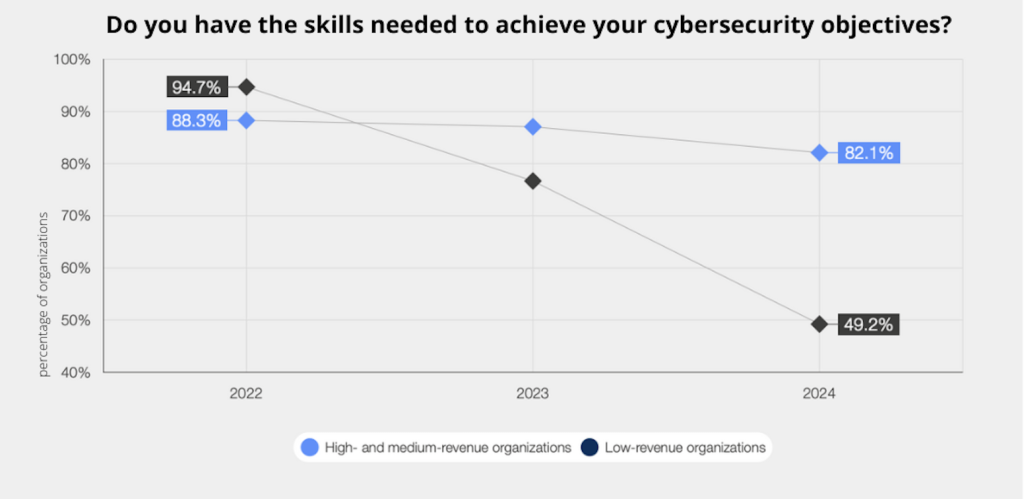
Think about it – for big companies, a data breach might hurt their reputation, but for an SME, a single cyberattack can be the end of the road. According to a research, 60% of small organizations close within 6 months after being victims of a cyber attack. That is why addressing the cybersecurity skills gap and closing it is essential for SMEs to stay secure in an increasingly digital world. So, how do you, as an SME, close this gap and protect your business? It starts with understanding the specific challenges you face – and then finding practical, achievable solutions to strengthen your cybersecurity posture.
The cybersecurity skill gap challenges in SMEs
SMEs face several unique challenges in dealing with cybersecurity threats, and one of the most pressing is the lack of cybersecurity skills within their workforce. Below are the key issues that contribute to this skills gap:
- Limited budget for cybersecurity
Unlike large corporations, SMEs often operate on tight budgets, making it difficult to allocate substantial funds to cybersecurity efforts. McKinsey’s research indicates that one in three small businesses with fewer than 50 employees use free or consumer-grade cybersecurity products, reflecting minimal investment in robust security solutions. Additionally, one in five SMEs have no endpoint security at all, underscoring the limited budget many SMEs allocate to cybersecurity. Also, the lack of dedicated personnel leaves security tasks to overburdened IT staff, who may not have specialized cybersecurity expertise.
- Difficulty attracting talent
Cybersecurity professionals are in high demand across all industries. Given the limited resources, it is easily understandable that SMEs struggle to compete with larger companies offering higher salaries, better benefits, and more advancement opportunities. Talented cybersecurity experts are often drawn to larger organizations or tech giants, leaving SMEs with a shallow talent pool to draw from.
- Lack of in-house expertise
Most SMEs simply don’t have the resources for a dedicated cybersecurity team. This leaves general IT staff to take on security duties in addition to their usual workload. While they might be great at setting up networks or troubleshooting software, they often don’t have the expertise to tackle sophisticated cyber threats. And as cyberattacks become more advanced, the stakes keep rising for businesses without this specialized knowledge.
- Complex cybersecurity environment
The world of cybersecurity is fast-moving and complicated. New threats like ransomware, phishing schemes, and zero-day vulnerabilities pop up all the time. For an SME without a dedicated cybersecurity expert, keeping up with these threats can feel like an impossible task. It’s no wonder many small businesses feel overwhelmed trying to stay secure.
Closing the cybersecurity skills gap: practical solutions for SMEs
While the cybersecurity skills gap is a significant challenge, SMEs can take proactive steps to mitigate their risks and improve their cyber resilience. One of the most effective—and often overlooked—strategies is investing in cybersecurity training for your current team and focusing on essential, high-impact practices.
1. Upskill your existing team
Hiring new cybersecurity professionals is expensive, and as we’ve discussed, the competition for talent is fierce. But here’s the good news: you don’t need to look outside your organization to build a strong cybersecurity foundation. Upskilling your existing team is a cost-effective way to close the skills gap and strengthen your defenses from within.
By investing in online courses, certifications, and webinars, your current IT staff can gain the knowledge and skills they need to handle common cybersecurity threats. The best part? They can learn at their own pace and apply their new skills immediately, focusing on practical solutions that offer the highest return on investment.
2. Focus on essential security practices
You don’t need to implement the most advanced security measures to protect your business. In fact, the most effective steps are often the simplest. Start by implementing these high-impact practices:
- Multi-Factor Authentication (MFA): This adds an extra layer of protection, making it harder for attackers to gain access to your systems.
- Regular software updates: Keeping software up to date ensures that known vulnerabilities are patched before attackers can exploit them.
- Data backups: Regular backups are critical to recovering quickly from attacks like ransomware.
- Employee phishing awareness training: Since phishing is one of the most common attack methods, training your staff to recognize suspicious emails can prevent costly breaches.
These steps don’t require deep expertise but can significantly reduce your company’s exposure to cyber risks.
3. Foster a security-first culture
Upskilling your team isn’t just about boosting their technical abilities—it’s about creating a “security-first” mindset across your organization. Human error is a major factor in 95% of cybersecurity breaches (IBM, 2020), so training everyone to be vigilant is key. Empower your employees to spot threats, such as phishing or social engineering, and encourage them to adopt proactive security habits. This way, cybersecurity becomes everyone’s responsibility, not just the IT departments.
Conclusion
The cybersecurity skills gap may feel like a daunting challenge for SMEs, but it also presents a chance to strengthen your business from within. By prioritizing training and upskilling your existing staff, you can take concrete steps to reduce your exposure to cyber threats. When your employees are trained to recognize and respond to threats like phishing, ransomware, and social engineering, they become your first line of defense.
Are you ready to close the cybersecurity skills gap in your organization? Start by assessing your team’s current knowledge and skills, identifying areas for improvement, and tailoring future training programs to close those gaps. Learn more about the Cybersecurity Skill Assessment and take the next step in building a robust, resilient cybersecurity framework for your business!