
Generative AI, cybersecurity, data breaches, and deepfakes – these are no longer just industry buzzwords. They have become an integral part of our daily lives, affecting individuals and businesses and even politics alike. As technology advances, so do the risks, making cybersecurity a top priority for everyone.
In this blog article, we explore five key cybersecurity trends that will shape 2025. Presented in alphabetical order, these trends highlight the most pressing challenges and necessary responses to safeguard digital security.
1. AI Regulation & Compliance
Artificial intelligence is rapidly reshaping cybersecurity by enhancing threat detection, automating response, and providing predictive analytics across various sectors. However, the same technological advancements that strengthen security defenses also empower cybercriminals, enabling AI-driven attacks, deepfake scams, and adaptive malware. This dual-use nature of AI underscores the urgent need for clear regulatory frameworks to ensure responsible and ethical AI deployment.
Recognizing these challenges, the Council of the European Union (EU) approved the EU AI Act in 2024, marking a milestone in global AI governance. As of February 2, 2025, the first two chapters officially came into effect, setting the foundation for stricter AI compliance. Now, businesses leveraging AI applications must adhere to Articles 4 and 5, which outline prohibited AI practices and risk management requirements. These regulations are not just shaping corporate AI strategies but also redefining the entire digital landscape, affecting businesses and end-users alike. As 2025 unfolds, organizations must swiftly adapt to these new compliance standards, ensuring their AI systems align with evolving legal, ethical, and security expectations.
Need more details on the EU AI Act? Check out our previous blog.
2. Cyber Resilience
Cyber resilience isn’t just about predicting threats, but about proving preparedness in real-world scenarios. While many organizations claim to be ready, how many actually test their defenses against live threats? Continuous red teaming, adversary simulation, and attack response drills must become standard practice to ensure cybersecurity measures work when they matter most.
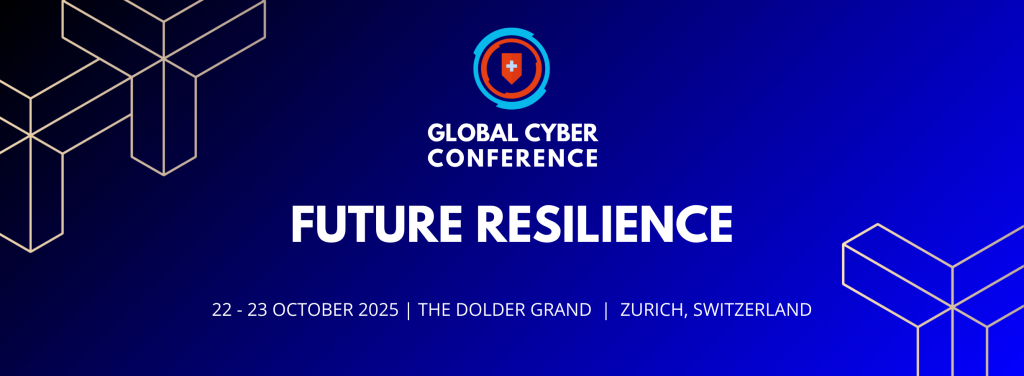
Emphasizing the importance of this proactive stance, the upcoming Global Cyber Conference, scheduled for October 22–23 at The Dolder Grand in Zurich, will focus on the theme “Future Resilience”. The Conference will bring together brilliant cybersecurity minds from industry, academia, and diplomacy where they share insights, strategies, and real-world experiences to support organizations shift from passive defense to proactive resilience.
3. Geopolitical Cyber Activities
Geopolitical tensions are fueling a rise in cyber warfare and espionage in 2025. Nation-states are targeting critical infrastructure, financial systems, and governmental institutions to further their political and economic agendas.
The World Economic Forum’s Global Cybersecurity Outlook 2025 report highlights that nearly 60% of organizations have adjusted their cybersecurity strategies in response to these geopolitical dynamics. CEOs are particularly concerned about cyber espionage and the potential loss of sensitive information or intellectual property, while cybersecurity leaders emphasize the risk of operational disruptions due to politically motivated cyberattacks.
One striking example is the deepfake video of Ukrainian President Volodymyr Zelenskyy in 2022, where he was falsely portrayed as surrendering to Russian forces. This incident underscored the power of AI-driven misinformation in geopolitical conflicts and demonstrated how digital technology can be weaponized to manipulate public opinion and destabilize nations.
The message is clear: cybersecurity is no longer just a technical issue. It’s a global security priority. Organizations must continuously assess geopolitical risks and strengthen their defenses to stay ahead.
4. Social Engineering
Cybercriminals are no longer just hacking systems. They are hacking human minds. With the rise of AI-driven deception, attackers are now weaponizing deepfakes to carry out fraud, impersonation, and manipulation on an unprecedented scale. Imagine receiving a panicked call from a loved one, pleading for urgent financial help. Or an employee unknowingly approving a high-stakes transaction after hearing what seems to be their upper management’s familiar voice. These aren’t just scenarios in the movie anymore. They are real tactics being used to exploit human psychology.
Adding fuel to the fire, phishing attacks are skyrocketing in Switzerland, with recent reports showing that the number of phishing websites has doubled (Zahl der Phishing-Websites verdoppelt sich, SwissCyberSecurity.net). In response, the Federal Office for Cyber Security BACS, urges stronger countermeasures. To combat these sophisticated threats that can happen to anyone, organizations must prioritize deepfake detection, strengthen biometric security, and enhance employee awareness training. But the fight against social engineering isn’t just a corporate issue. It is a digital survival skill. As digital citizens, we must remain vigilant, question the authenticity of digital interactions, and stay informed to protect ourselves and our loved ones in this new age of deception.
5. Supply Chain Attacks & Third-Party Risks
Cybercriminals are increasingly targeting suppliers, contractors, and service providers as weak links in an organization’s security. These attacks exploit third-party vulnerabilities to infiltrate larger enterprises, making supply chain security a top priority.
In 2025, supply chain vulnerabilities are emerging as the top ecosystem cyber risk, leveraging AI-driven automation to identify and exploit weak points in vendor ecosystems (Global Cybersecurity Outlook 2025, World Economic Forum). Ransomware groups and nation-state actors are shifting their focus toward software supply chains, leveraging compromised updates, insecure APIs, and manipulated dependencies to distribute malware at scale. The rising trend of “island hopping”, where attackers move laterally through interconnected businesses, underscores the urgent need for strengthened vendor security.
Final Thoughts
The year 2025 demands a proactive and comprehensive approach to cybersecurity. Organizations must navigate the complexities of AI regulation, fortify supply chains, counteract geopolitical threats, detect and mitigate deepfake attacks, and carefully test their cyber resilience. In an environment where cyber threats are continually evolving, it is imperative for organizations to adapt swiftly, anticipate emerging challenges, and implement robust security measures to stay ahead of adversaries.
Feeling overwhelmed? Swiss Cyber Institute is here to support both organizations and individuals. Our comprehensive cybersecurity and AI training programs are designed to equip you with practical skills that enhance your career and daily life. For organizations, the Cybersecurity Skill Assessment and Team Training prepare your teams to proactively tackle the challenges of the current digital world.
Stay informed and secure. And embrace the digital future confidently with Swiss Cyber Insitute by your side.